Texas lien laws require most contractors to send a pre-lien notice before filing a mechanic’s lien, but the rules depend on your role in the project.
- General contractors with direct owner contracts can skip the notice and file a lien directly.
- Subcontractors, suppliers, and sub-subcontractors must send notices to preserve lien rights.
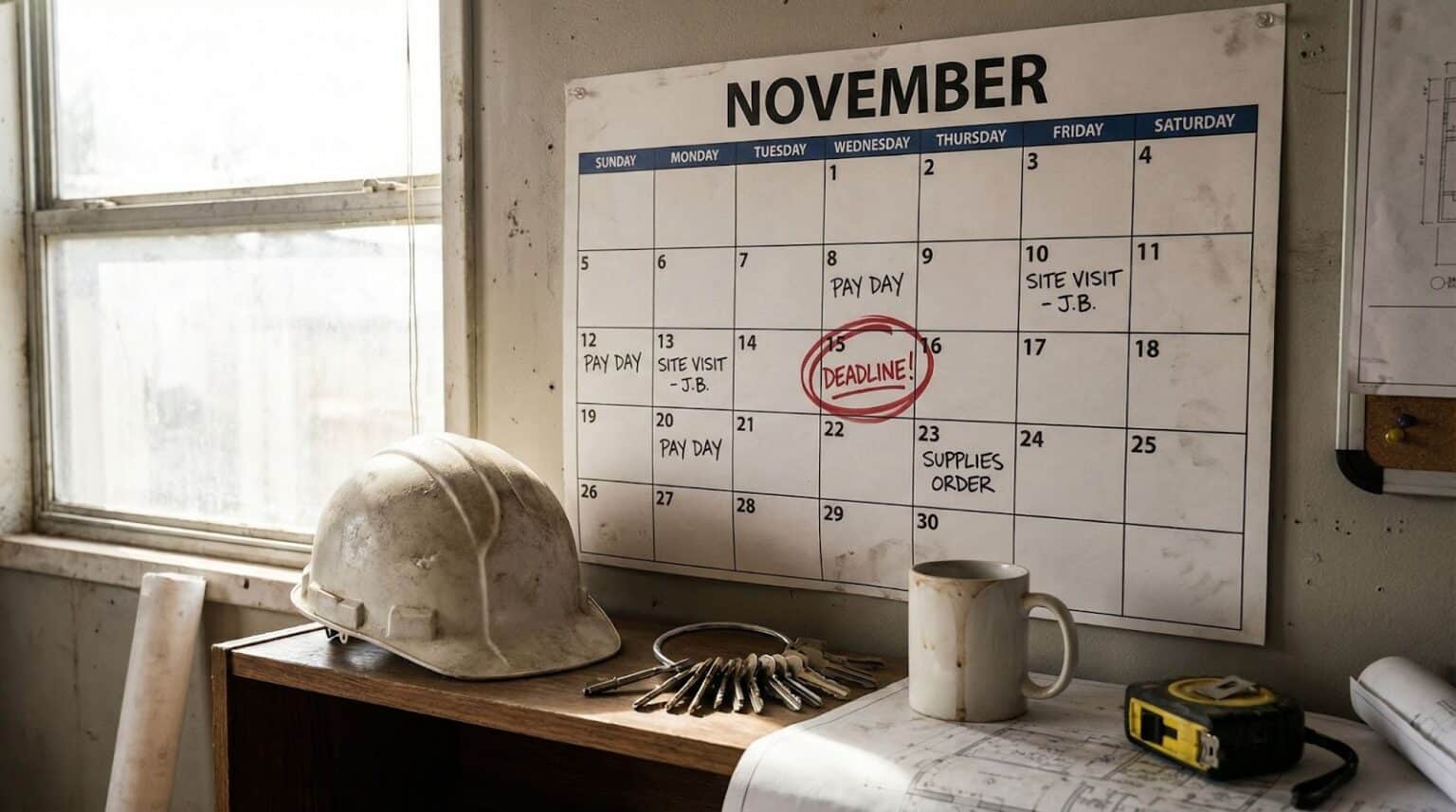
- Commercial and residential projects have different deadlines (the 15th of the 2nd or 3rd month).
- Missing your pre-lien notice deadline means losing your right to file a construction lien in Texas.
If you’re not the general contractor, treat pre-lien notices as non-negotiable. One missed deadline could cost you thousands.
Texas has some of the strictest construction lien laws in the country. Whether you need to send a pre-lien notice before filing a mechanic’s lien depends entirely on where you sit in the project hierarchy. Get it wrong, and you could lose your legal right to collect payment, even if you did excellent work and have invoices to prove it.
Construction employment in Texas topped 860,900 workers in August 2024, making it one of the most active construction markets in the nation. With that much work happening across the state, payment disputes are inevitable. Understanding pre-lien notice requirements can mean the difference between getting paid and walking away empty-handed.
This guide breaks down who must send a pre-lien notice in Texas, when to send it, what happens if you skip it, and how to protect your payment rights under Texas Construction Law.
What Is a Pre-Lien Notice in Texas?
A pre-lien notice in Texas is a written document that alerts the property owner and general contractor that a subcontractor, supplier, or other party has not been paid for work performed on a project. The notice preserves your right to file a mechanic’s lien if payment still doesn’t come through.
You might hear this document called by different names in the industry. Some people call it a preliminary notice in Texas, while others refer to it as a Notice of Intent to Lien, a Monthly Notice, a Second Month Notice, a Third Month Notice, or a Fund-Trapping Notice. All these terms describe essentially the same legal requirement under Texas Property Code Chapter 53.
Here’s the key point that confuses many contractors: sending a pre-lien notice does not mean you have to file a mechanic’s lien. In many cases, simply sending the notice is enough to prompt payment. The property owner sees that you’re serious about protecting your rights, and they make sure you get paid before the situation escalates. Think of the notice as a formal heads-up that gives everyone a chance to resolve the issue before things get more complicated.
The notice also serves an important legal function called “fund trapping.” When a property owner receives your notice, they gain the legal authority to withhold funds from payments to the general contractor. This protects money that might otherwise disappear before you can collect what you’re owed.
Who Needs to Send a Pre-Lien Notice—And Who Doesn’t?
Your position in the project determines whether you must send a pre-lien notice. Texas lien law is very specific, and many contractors make costly mistakes.

General Contractors (Original Contractors)
If you have a direct contract with the property owner, you are considered an original contractor under Texas law. You do not need to send a pre-lien notice before filing a mechanic’s lien. You can go straight to filing a lien affidavit if payment doesn’t come through. However, many general contractors still choose to send a formal demand letter first as a professional courtesy and to document their attempts to resolve the issue.
Subcontractors (First Tier)
Subcontractors who contract directly with the general contractor must send a pre-lien notice to both the property owner and the general contractor before filing a lien. This requirement exists because the property owner may not even know you worked on the project. The notice puts them on legal notice that payment is owed somewhere down the chain.
Sub-Subcontractors (Second Tier and Below)
If you were hired by a subcontractor rather than the general contractor, you have the same notice requirements but shorter deadlines. You must send notice to the general contractor, the property owner, and technically to all subcontractors above you in the chain. The tighter timeline reflects the fact that you’re further removed from the property owner, and your ability to “trap” funds diminishes over time.
Material Suppliers and Equipment Rental Companies
Anyone who supplied materials, equipment, or specially fabricated items for a project and doesn’t have a direct contract with the property owner must also send a pre-lien notice. This category includes lumber yards, equipment rental companies, and suppliers of custom-manufactured materials.
Licensed Design Professionals
Architects, engineers, and surveyors who provided design services for the project may also need to send notice if they don’t have a direct contract with the property owner.
What Are the Pre-Lien Notice Deadlines by Contractor Role?
Deadlines for pre-lien notices in Texas depend on two factors: your role in the project and whether the project is commercial or residential. Miss these deadlines by even one day, and you could lose your right to file a construction lien in Texas.
The following table summarizes the key deadlines based on when you performed work or delivered materials:
| Contractor Role | Commercial Projects | Residential Projects |
| General Contractor | No pre-lien notice required | No pre-lien notice required |
| Subcontractor (1st Tier) | Send notice by the 15th of the 3rd month after work | Send notice by the 15th of the 2nd month after work |
| Sub-Subcontractor (2nd Tier) | Send notice by the 15th of the 3rd month after work | Send notice by the 15th of the 2nd month after work |
| Material Supplier | Send notice by the 15th of the 3rd month after delivery | Send notice by the 15th of the 2nd month after delivery |
Important deadline notes:

Example: How Deadlines Work in Practice
Let’s say you’re an electrical subcontractor who completed work on an office building (commercial project) in January. Your pre-lien notice deadline would be April 15th—the 15th day of the third month after January. If you also worked in February and weren’t paid for that work either, you’d need to send another notice by May 15th for the February work.
For a residential project where you installed HVAC equipment in March, your deadline would be May 15th—the 15th day of the second month after March.
What Happens If You Don’t Send a Pre-Lien Notice?
The no pre-lien consequences in Texas are severe and immediate. If you’re required to send a pre-lien notice and you miss the deadline, you lose your right to file a mechanic’s lien for that month’s work. Period.
This isn’t a situation where you pay a penalty or file some extra paperwork. Your lien rights for that unpaid work simply disappear. The Texas courts have consistently upheld this requirement, and property owners’ attorneys know to look for missed notice deadlines as an easy way to invalidate lien claims.

Here’s what specifically happens when you skip the pre-lien notice:
You cannot file a valid mechanic’s lien. Even if you complete every other step perfectly (proper affidavit, correct filing location, timely submission), your lien will be invalid because you failed to send the required notice. A property owner can challenge your lien in court and have it thrown out based solely on the missing notice.
You lose your fund-trapping rights. Without proper notice, the property owner has no legal obligation to withhold funds from payments to the general contractor on your behalf. Money that could have been “trapped” to pay you may have already been paid out.
You may still have contract claims, but they’re weaker. Without the security of a lien on the property, you’re left pursuing payment as an unsecured creditor. Your options are hiring a collections attorney or taking other legal action, which typically costs more and takes longer than enforcing a lien.
Each month stands alone. If you worked for three months and only sent proper notice for one month, you can only file a lien for that one month’s work. The other two months are lost.
What Must a Preliminary Notice in Texas Include?
A preliminary notice in Texas must contain specific information to be legally valid. Leaving out required details or using incorrect information could jeopardize your right to file a lien later. Here’s what your notice must include:
Project and property information: The notice must identify the project by name, street address, and the county where the property is located. Using the legal property description is preferred when available, though the street address is generally acceptable.
Your information as the claimant: Include your full legal name or company name, mailing address, and contact information. The property owner and general contractor need to know exactly who is claiming the unpaid debt.
Description of work or materials: Briefly describe the labor you performed or the materials you delivered. This description doesn’t need to be exhaustive. Something like “electrical installation services provided in March 2025” or “roofing materials delivered in April 2025” is sufficient.
Party you contracted with: If you’re a subcontractor or supplier, identify the general contractor. If you’re a sub-subcontractor, identify the subcontractor you worked for and the general contractor above them.
Amounts owed by month: State the specific amount you haven’t been paid for each month and specify which month the work was done. Texas requires a separate notice for each unpaid month.
Statutory warning language: Your notice must include the standard legal warning that the owner’s property may be subject to a lien if payment is not made. This language is required under Texas law and alerts the owner to their potential liability.
How to Properly Send Your Pre-Lien Notice
How you deliver your pre-lien notice matters just as much as what it contains. Texas law requires that notices be sent by registered, certified, or otherwise traceable mail that provides proof of delivery.
Regular first-class mail won’t protect your lien rights if the delivery is ever challenged in court. You need documentation showing exactly when you sent the notice and that it was delivered (or at least that delivery was attempted).
Recommended delivery methods:
- USPS Certified Mail with Return Receipt Requested
- USPS Registered Mail
- Private delivery services with tracking (FedEx, UPS) that provide proof of delivery
Keep all your proof of mailing (the certified mail receipts, return receipt cards, and tracking confirmations). Store these with your project files. If you ever need to file a mechanic’s lien, you’ll need to include the dates you sent notices and show that you met all deadlines.
Who receives the notice?
For most situations, you’ll send the notice to both the property owner and the general contractor. Sub-subcontractors should also send notice to the subcontractor they contracted with, though this isn’t always legally required. When in doubt, send notice to everyone in the chain above you.
What Are Common Pre-Lien Notice Mistakes to Avoid?
Even experienced contractors make errors that cost them their lien rights. Here are the most frequent problems and how to avoid them:

Frequently Asked Questions
Can a general contractor skip the pre-lien notice entirely?
Yes. Under Texas Property Code, original contractors who have a direct contract with the property owner are not required to send a pre-lien notice before filing a mechanic’s lien. You can proceed directly to filing a lien affidavit if you’re not getting paid. However, many general contractors still send a formal demand letter as a first step since it often resolves the payment issue without needing to file.
What if I missed my pre-lien notice deadline?
If you missed the deadline for a particular month’s work, you’ve lost your lien rights for that month’s payment. There’s no late filing option or penalty you can pay to restore those rights. However, if you’re still working on the project and haven’t been paid for more recent months, you can and should send proper notice for that newer work. Going forward, treat every unpaid month as a new deadline.
Does sending a pre-lien notice mean I have to file a lien?
No. Sending a pre-lien notice simply preserves your option to file a lien if needed. In many cases, the notice itself prompts payment because it signals to the property owner and general contractor that you’re serious about protecting your rights. If you get paid after sending the notice, no lien is necessary.
What defines a “residential” project under Texas lien law?
A residential project is one where the property owner actually lives or will live in the property. This includes single-family homes, duplexes, and owner-occupied condos. Investment properties, spec homes built for sale, apartments, and rental properties are typically classified as commercial projects under Texas lien law, even if they’re technically residential buildings.
Protect Your Payment Rights Before It’s Too Late
Understanding pre-lien notice requirements in Texas is essential for any contractor, subcontractor, or supplier who wants to get paid for their work. The rules may seem complicated, but they exist to give you a clear path to collecting what you’re owed.
Start every project by collecting the information you’ll need if payment becomes an issue: the property owner’s name and address, the general contractor’s contact information, and the project location. Know which deadlines apply to your role. When an invoice goes unpaid, don’t wait—send your pre-lien notice before the deadline passes.Texas Easy Lien makes this entire process simpler. You can prepare, notarize, file, and mail your pre-lien notices and lien documents online in minutes, for a fraction of what an attorney would charge. Get started with Texas Easy Lien today to protect your payment rights.