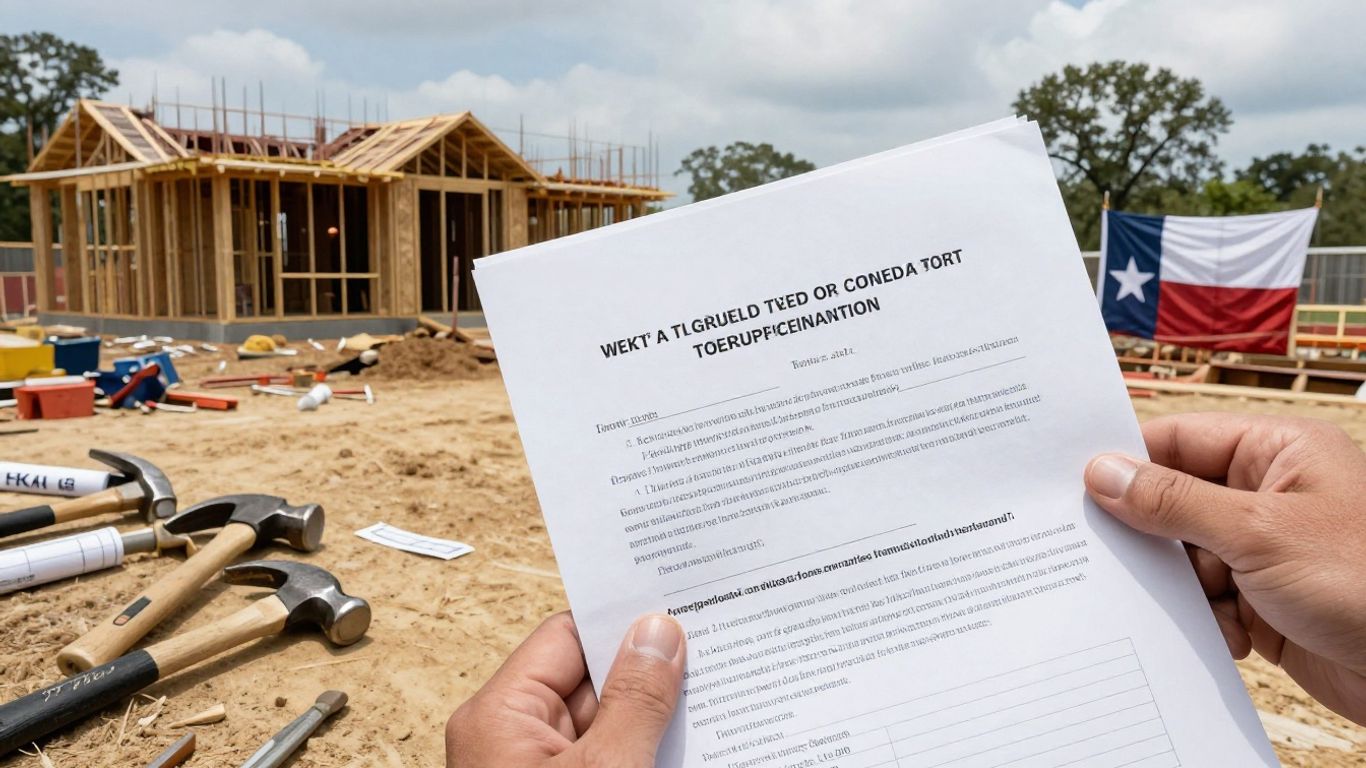
Texas construction contractors face an evolving legal landscape in 2025, with ongoing implications from major lien law reforms and new industry challenges requiring updated compliance strategies. The construction industry continues to experience strong fundamentals despite persistent payment challenges, making lien law knowledge more crucial than ever for protecting contractor interests.
Understanding the current texas lien laws 2025 framework helps contractors protect their payment rights while avoiding costly legal mistakes. The significant changes implemented in 2022 continue to affect how contractors file liens, send notices, and enforce payment claims throughout Texas.
Current Texas Lien Law Framework for 2025
The foundation of Texas lien laws 2025 rests on the comprehensive reforms enacted through House Bill 2237, which took effect in January 2022 and continue to govern construction projects today. These changes apply to all original contracts signed on or after January 1, 2022, meaning the vast majority of active projects now operate under the updated legal framework.

Key provisions that continue to impact contractors in 2025 include standardized notice forms, simplified delivery requirements, and unified timelines for different contractor tiers. The elimination of certain redundant notice requirements has streamlined compliance for many contractors while maintaining robust payment protections.
The statutory definition updates clarify important terms like “improvement,” “retainage,” and “reserved funds,” providing contractors with clearer guidance about their rights and obligations. These definitional changes affect how contractors calculate claim amounts, determine filing deadlines, and understand their position in the construction hierarchy.
Understanding these foundational changes helps contractors avoid common mistakes that could invalidate their lien rights. The updated framework emphasizes consistency and clarity while maintaining the strong payment protections that make Texas mechanic’s liens valuable tools for securing payment.
Major 2022 Changes Still Impacting Contractors
House Bill 2237 represented the most comprehensive overhaul of Texas lien law in decades, with changes that continue to shape contractor operations in 2025. The legislation resulted from years of collaboration among industry stakeholders to create more efficient and reliable cooperation among contractors, subcontractors, owners, and lenders.
Key Legal Changes Affecting Lien Rights:
The most significant ongoing impact involves simplified notice requirements that eliminated the complex multi-tier system. Construction attorney Jacob D. Thomas notes: “The changes made to Chapter 53 by HB 2237, when they go into effect, should make things easier for lien claimants. The changes that will have the biggest effect on lien claimants is the required standardized notice forms and the reduced statute of limitations.”
Second-tier subcontractors and lower-tier participants no longer face shortened notice obligations, as second month notices have been eliminated for many situations, creating more uniform requirements across different contractor tiers. This standardization addresses years of confusion about which deadlines applied to different contractor relationships.
Lien waiver requirements were permanently simplified, with notarization no longer required for standard waivers. This change reduces costs and administrative burdens for contractors while maintaining the legal effectiveness of properly executed waivers. However, contractors must still ensure they’re using the correct waiver forms and understanding the implications of conditional versus unconditional releases.
The statute of limitations for enforcing liens was standardized at one year for all project types, eliminating the previous distinction between residential and commercial projects. This represents a significant change for commercial contractors who previously had two years to pursue enforcement actions.
Expanded lien rights for design professionals create new opportunities and obligations for architects, engineers, and surveyors working on construction projects. These professionals now have lien rights even when not contracting directly with property owners, representing what construction law experts call one of the most significant expansions of lien coverage in Texas history.
Essential Notice Requirements for Different Contractor Types
Understanding which notice requirements apply to your specific contractor type remains critical for preserving lien rights in 2025. Original contractors who have direct contracts with property owners continue to enjoy the simplest requirements, typically needing only to file lien affidavits within appropriate deadlines without preliminary notices.
First-tier subcontractors work directly with general contractors and must send pre-lien notices to both property owners and general contractors by the 15th day of the third month after providing labor or materials. The standardized notice forms include required language that triggers the owner’s obligation to withhold funds and provides clear information about potential lien claims.

Second-tier and lower subcontractors benefit from simplified notice obligations under the current law. They now use the same statutory notice form as first-tier subcontractors and send notices to both property owners and general contractors by the same deadline—the 15th day of the third month after providing labor or materials.
Suppliers and material providers must carefully track delivery dates and follow notice requirements based on their contractual relationships. Special provisions still apply for specially fabricated materials, though the requirements have been streamlined compared to pre-2022 law.
Design professionals including architects, engineers, and surveyors now have clear lien rights when working as subcontractors. They must follow the same notice requirements as other subcontractors when not contracting directly with property owners, representing a significant expansion of lien law coverage.
Deadline Management and Critical Timelines
Effective deadline management separates successful contractors from those who lose valuable lien rights through procedural failures. The monthly calculation system requires contractors to track work completion dates rather than invoice dates, making accurate record-keeping essential for maintaining lien rights.
Commercial construction projects operate on longer timelines that provide more flexibility for contractors to resolve payment issues before filing liens. Original contractors have until the 15th day of the fourth month after completion to file lien affidavits, while subcontractors must send notices by the 15th day of the third month and file affidavits by the 15th day of the fourth month.
Residential construction projects continue to operate under accelerated timelines that reflect Texas’s special protections for homeowners. Original contractors must file by the 15th day of the third month, while subcontractors must send notices by the 15th day of the second month and file affidavits by the 15th day of the third month.
The weekend and holiday extension provision provides practical relief when deadlines fall on non-business days. However, contractors should still aim to submit notices and filings early to avoid any potential complications or disputes about deadline compliance.
Understanding that different project types may have varying deadlines helps contractors develop systematic approaches to deadline management. Proper timeline tracking becomes even more important as contractors work on multiple projects simultaneously with different completion dates and filing requirements.
Legal Expert Analysis: Understanding the Impact
The transformation brought by HB 2237 continues to reverberate through the Texas construction industry in 2025. Legal experts who helped shape and interpret these changes provide valuable insights into their practical implications for contractors.
Standardized Notice Forms Revolution
The introduction of mandatory standardized notice forms represents perhaps the most practical improvement for contractors. Katie Lee from PDH Law observes: “While HB 2237 brought numerous changes to the lien notice and filing requirements, best practices remain the same—send notice as soon as you encounter a payment issue, and contact an attorney for help navigating the complex legal requirements.”
The standardized forms eliminate the previous confusion about required language and content, giving contractors clear templates that ensure compliance when properly completed. However, legal practitioners emphasize that contractors must still understand which form applies to their specific situation and timing requirements.
Delivery Method Flexibility
The expansion of acceptable delivery methods provides practical benefits while maintaining legal protections. Attorneys at Allensworth Law note: “We recommend the continued use of Certified Mail, Return Receipt Requested, as the preferred method of sending notices, but the availability to use private delivery methods is a welcome change in the event that notice by Certified Mail is not feasible.”
This flexibility acknowledges modern business practices while ensuring notices reach their intended recipients with proper documentation. Contractors can now use FedEx, UPS, and other traceable delivery services, though legal experts stress the importance of maintaining delivery confirmation records.
Design Professional Expansion
The expansion of lien rights to design professionals regardless of their contractual relationships represents a fundamental shift in Texas lien law. This change recognizes the modern reality of complex construction projects where architects, engineers, and surveyors may work through multiple layers of contractors while still contributing essential improvements to properties.
Construction law specialist Steven E. Kennedy, who has three decades of construction law experience and was among the first group of Texas attorneys to receive board certification in construction law, helped guide contractors through these expanded protections that now benefit thousands of design professionals across Texas.
Summary of Critical Legal Changes Impacting Contractor Rights:
- Notice Simplification: Elimination of dual notice requirements for lower-tier subcontractors
- Standardized Forms: Mandatory use of statutory notice templates in Texas Property Code Sections 53.056 and 53.057
- Delivery Flexibility: Acceptance of traceable private delivery services beyond certified mail
- Unified Deadlines: Same notice deadlines for first-tier and second-tier subcontractors
- Expanded Coverage: Design professionals gain lien rights regardless of contractual tier
- Shortened Enforcement: One-year statute of limitations for all project types
- Weekend Extensions: Automatic deadline extensions when due dates fall on non-business days
- Simplified Waivers: Elimination of notarization requirements for standard lien waivers
Filing Procedures and Required Documentation
Modern lien filing procedures combine traditional legal requirements with updated delivery methods that reflect current business practices. The acceptance of traceable private delivery services beyond certified mail provides contractors with more options for ensuring proper notice delivery while maintaining legal compliance.
Required documentation continues to include detailed project information, accurate claim amounts calculated by month, and proper descriptions of work performed or materials supplied. The affidavit of lien must include specific statutory language and be signed under oath, making accuracy and completeness essential for valid filings.
County filing requirements vary across Texas, with some counties accepting electronic filings while others require in-person submission or mail delivery. Contractors must verify the specific procedures for each county where their projects are located, as improper filing procedures can invalidate otherwise valid liens.

Post-filing notice requirements mandate that contractors notify property owners and general contractors within five days after filing lien affidavits. This notification helps ensure all parties understand that a lien has been filed and can take appropriate action to resolve payment disputes.
Record-keeping obligations extend beyond the initial filing, as contractors must maintain documentation to support potential lien enforcement actions. This includes contracts, invoices, delivery receipts, photos of completed work, and correspondence related to payment requests.
Payment Protection Strategies Beyond Basic Compliance
While understanding lien law requirements provides essential payment protection, successful contractors implement comprehensive strategies that address the broader payment challenges facing the construction industry. Contractors increasingly face payment delays that inflate project bids and stall project completion, making proactive payment management crucial for business sustainability.
Effective contract drafting helps prevent payment disputes before they arise. Including clear payment terms, detailed scope descriptions, and appropriate change order procedures reduces ambiguity that often leads to payment delays. Well-drafted contracts also facilitate easier lien filing if payment problems develop.
Progress billing strategies help maintain steady cash flow throughout project duration rather than waiting for project completion to request payment. Regular billing cycles aligned with project milestones provide contractors with earlier payment opportunities and help identify potential payment problems before they become severe.
Building relationships with reliable legal resources and lien service providers ensures contractors can respond quickly when payment issues arise. Having professional support for complex lien situations becomes particularly valuable when dealing with large claims or complicated multi-party construction arrangements.
Credit checking and due diligence on potential clients helps contractors avoid problematic payment situations before committing resources to projects. Understanding client payment histories and financial stability reduces the likelihood of encountering serious payment delays.
Industry Trends Affecting Lien Law Application
The construction industry’s ongoing digital transformation affects how contractors manage lien law compliance and payment protection. Electronic documentation, digital communication, and automated tracking systems help contractors maintain better records and meet filing deadlines more consistently.
Payment technology adoption accelerates as industry participants seek solutions to persistent payment delay problems. Recent studies show that general contractors report faster payment processing times when developers adopt digital payment tools, suggesting that technology improvements may reduce the frequency of situations requiring lien filing.
Labor shortage challenges continue to affect project execution and payment timing throughout 2025. When contractors struggle to complete projects on schedule due to workforce limitations, payment timing can be affected, making lien rights more important for protecting contractors who face delays beyond their control.
Economic conditions including interest rates, material costs, and market demand create varying pressures on project financing and payment practices. Contractors must adapt their payment protection strategies to account for changing economic conditions that affect client ability to pay and project viability.
The increasing complexity of construction projects, with multiple contractors, suppliers, and specialty trades, creates more opportunities for payment disputes and makes understanding lien law requirements even more critical for protecting contractor interests.
Common Compliance Mistakes to Avoid
Timing errors represent the most frequent cause of lien right failures among Texas contractors. Calculating deadlines incorrectly, using invoice dates instead of work completion dates, or failing to account for different project types can eliminate otherwise valid lien claims.
Notice delivery mistakes often occur when contractors fail to send notices to all required parties or use inadequate delivery methods that don’t provide proof of receipt. The expanded delivery options under current law provide more flexibility, but contractors must still ensure their chosen method creates reliable documentation.
Form and content errors can invalidate liens even when timing and delivery are correct. Using outdated forms, including incorrect project information, or failing to include required statutory language prevents liens from providing effective payment protection.
Documentation failures affect contractors’ ability to support their lien claims if disputes arise. Inadequate record-keeping regarding work performed, materials supplied, or payment requests can weaken lien enforcement efforts even when initial filing procedures were followed correctly.
Understanding contractor versus supplier distinctions helps avoid confusion about which requirements apply to different types of construction industry participants.
Enforcement and Collection Strategies
Successful lien enforcement requires understanding that filing a lien represents the beginning rather than the end of the payment collection process. The one-year statute of limitations for enforcement actions requires contractors to act promptly if initial lien filing doesn’t resolve payment disputes.
Negotiation strategies often prove more effective than immediate litigation for resolving payment disputes. Many property owners and general contractors prefer to settle lien claims through negotiation rather than face the uncertainty and expense of lien foreclosure actions.
Understanding the foreclosure process helps contractors make informed decisions about when to pursue enforcement actions. Lien foreclosure involves court proceedings that can result in property sales to satisfy unpaid claims, making it a powerful tool that property owners usually prefer to avoid.
Settlement options may include partial payments, payment plans, or alternative arrangements that provide contractors with payment while avoiding lengthy legal proceedings. Effective settlement negotiations require understanding both the strength of the lien claim and the practical realities of collection from different types of defendants.
Working with experienced legal counsel becomes essential when pursuing lien enforcement actions. The complexity of foreclosure proceedings and the potential for substantial recovery amounts justify professional legal representation for significant claims.
Technology and Modern Lien Management
Digital lien management systems help contractors track multiple projects, manage deadlines, and ensure compliance with complex legal requirements. Automated reminder systems reduce the risk of missing critical deadlines while digital record-keeping improves documentation quality.
Electronic filing capabilities where available streamline the submission process and provide immediate confirmation of successful filings. However, contractors must verify that their target counties accept electronic submissions and understand any specific formatting or procedural requirements.
Key Technology Benefits for Contractors:
- Automated deadline tracking and reminder systems
- Digital documentation storage and organization
- Electronic notice delivery with confirmation tracking
- Integration with accounting and project management systems
Mobile accessibility allows contractors to manage lien compliance from job sites rather than requiring office-based administrative work. This flexibility helps contractors respond quickly to payment issues and maintain compliance even while focused on project execution.
Cloud-based systems provide secure access to lien documents and project information from any location while ensuring backup and recovery capabilities that protect critical business records from loss or damage.
Preparing for Future Legal Changes
While no major lien law changes are currently pending in the Texas Legislature, contractors should stay informed about potential future modifications that could affect their rights and obligations. Industry organizations and legal professionals provide updates about proposed changes that could impact lien law application.
Building flexible compliance systems helps contractors adapt to future legal changes without requiring complete overhauls of their payment protection procedures. Systems that emphasize documentation, deadline tracking, and proper record-keeping provide solid foundations for compliance regardless of specific legal requirements.
Essential Preparation Strategies:
- Maintaining comprehensive project documentation
- Building relationships with legal and industry professionals
- Staying current with continuing education and industry updates
- Developing systematic approaches to deadline management
- Understanding both current law and industry best practices
Professional development through industry associations, legal education seminars, and construction law updates helps contractors stay current with legal developments and industry best practices that affect payment protection strategies.
Understanding basic lien concepts provides the foundation for adapting to future changes while maintaining effective payment protection throughout your construction business.
Staying Ahead in Texas Construction
Texas lien laws 2025 continue to provide powerful payment protection tools for contractors who understand and follow proper procedures. The simplified notice requirements and standardized forms make compliance more achievable while maintaining the strong payment protections that have made Texas mechanic’s liens valuable tools for securing payment.
Success in today’s construction environment requires combining legal compliance with proactive payment management strategies. Understanding your rights under current law, maintaining proper documentation, and acting promptly when payment issues arise helps ensure you can effectively use lien protections when needed.
The ongoing evolution of the construction industry, from digital payment systems to changing project delivery methods, makes staying current with legal requirements and industry best practices more important than ever. Contractors who invest in understanding lien law requirements and implementing systematic compliance procedures position themselves for greater success in securing payment and building sustainable businesses.
Don’t let complex legal requirements or tight deadlines prevent you from protecting your payment rights. Texas Easy Lien’s automated system handles the complex legal requirements while ensuring compliance with all current Texas lien laws. Contact our team today to learn how our streamlined process can protect your payment rights and simplify lien law compliance for your construction business.
Frequently Asked Questions
What are the most important changes in Texas lien laws for 2025? The most significant ongoing impacts come from the 2022 reforms that continue to govern contracts signed after January 1, 2022. Key changes include simplified notice requirements, standardized forms, elimination of certain second-month notices, and expanded lien rights for design professionals. The one-year statute of limitations applies to all projects regardless of type.
How do the new notice requirements affect different types of contractors? Original contractors with direct property owner contracts still don’t need preliminary notices. First-tier and second-tier subcontractors now use the same notice forms and deadlines—the 15th day of the third month after providing labor or materials. This simplified system eliminated the previous dual notice requirements for second-tier contractors.
What documentation do contractors need to maintain for lien compliance? Contractors should maintain detailed records including contracts, invoices organized by work month, delivery receipts, photos of completed work, correspondence about payment requests, and proof of notice delivery. Accurate work completion dates are crucial since all deadlines are calculated from the month work was performed, not invoice dates.
How has the statute of limitations change affected enforcement strategies? The standardized one-year statute of limitations means contractors must act more quickly to enforce liens regardless of whether projects are residential or commercial. This change requires more prompt action but provides greater predictability for planning enforcement strategies and settlement negotiations.